majesticriddle's pick · Updated July 2026
DREO Tower Fan for Bedroom
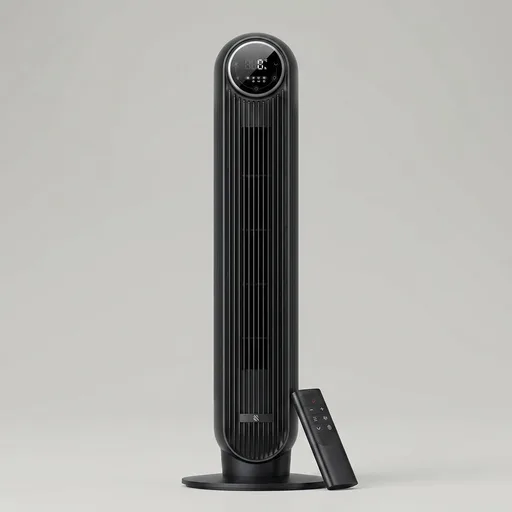
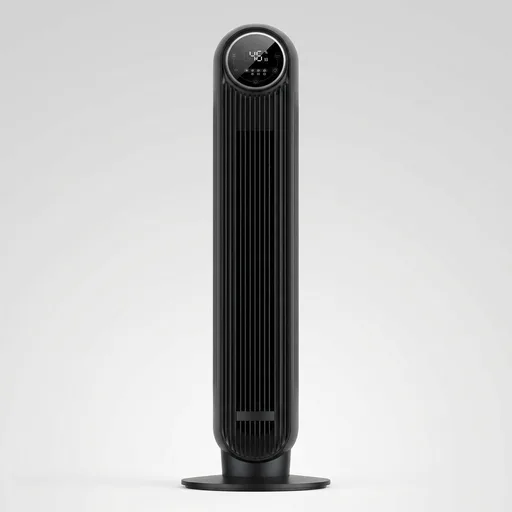
A tower fan like this may suit a bedroom, home office, or other room where floor space is tight and a standard box fan feels bulky. The bladeless shape and tall profile are mainly about convenience and placement. It can sit in a corner, move air across a wider vertical range, and avoid the look of a large open-blade fan sitting in the middle of the room.
The listed features point to a product aimed at people who want more control than a basic fan usually offers. Eight speeds and four modes give you room to tune airflow for different moments, whether that means a gentler setting for sleeping or a stronger setting for warm afternoons. A remote is also useful in practice, especially if the fan will live beside a bed or across the room. The 90 degree oscillation matters too, since a tower fan only earns its keep if it can spread air beyond one narrow lane.
The main thing to verify is how those specs feel in the real room. Airflow numbers and noise claims can look strong on paper, but placement, room size, and how far the fan sits from the bed or desk all change the result. It is worth checking whether the height, footprint, and control layout fit the space you have, and whether the display or buttons are easy to read in low light. If sleep is the main use, it is also worth confirming how bright the indicators are and whether they can be dimmed or switched off.
The DC motor is another point that may matter to careful buyers. In this category, DC motors are usually chosen for efficiency and finer speed control, but it is still worth looking at how the fan performs across the low settings as well as the higher ones. Marketing phrases like 20 dB and 28 ft/s are useful as starting points, not proof of how it will sound or feel in your room. The real question is whether the lowest settings are gentle enough for overnight use and whether the stronger settings move enough air to make the fan useful on hotter days.
For someone comparing bedroom fans, the appeal here is the balance of size, control, and remote operation. It is easier to justify than a larger floor fan if the room is short on space, and easier to live with than a basic bargain fan if you want several speed options and oscillation. On the other hand, anyone who wants the simplest possible appliance may not need this many settings, and anyone very sensitive to light or display glow should confirm that detail before buying.
Taken as a category choice, this looks like a reasonable fit for a small room where a slim, upright fan makes more sense than a wider one. The feature set is practical, not flashy, and the main questions are the usual ones: how quiet it really is, how strong the airflow feels at the speeds you would actually use, and whether the controls are simple enough that they do not become annoying after a few nights. If those check out, it should be a sensible pick for a tidy bedroom setup.
Amazon product links on this guide are not currently affiliate links. Neither majesticriddle nor Buyer Field Guide earns an affiliate commission from them.
See current price